Charting a New Path: Does Toronto Need More Autonomy?
Across Canada, and particularly in Toronto, calls for increased municipal autonomy and the protection of municipal authority in the Canadian constitution have been getting louder. On November 28, 2019, the Institute on Municipal Finance and Governance (IMFG) convened a public panel discussion in partnership with the Urban Land Institute–Toronto to explore these issues, particularly the […]

Power and Purpose: Canadian Municipal Law in Transition
Zack Taylor and Alec Dobson Taylor and Dobson’s overview of municipal law in Canada’s 10 provinces identifies similarities and variations among and within provinces in the articulation of municipal purposes and the provincial-municipal relationship, municipal powers and jurisdiction, the organization of municipal institutions, and finance. Their paper also comments on asymmetrical arrangements for large cities, […]
It Takes Three: Making Space for Cities in Canadian Federalism
Tomas Hachard The COVID-19 pandemic and the economic crisis it has produced have highlighted pre-existing cracks in Canada’s federal structure, particularly in relation to Canada’s cities. On the one hand, Canadian cities are on the front lines addressing and dealing with the impacts of Canada’s major policy challenges – not only COVID-19, but also climate […]

Constitutions and the Metropolis
Ran Hirschl Extensive urbanization and the consequent rise of megacities are among the most significant demographic phenomena of our time. Our constitutional institutions and constitutional imagination, however, have not even begun to catch up with the new reality. In this article, I address four dimensions of the great constitutional silence concerning the metropolis: (a) the […]
City,State: Constitutionalism and the Megacity
Ran Hirschl More than half of the world’s population lives in cities; by 2050, it will be more than three quarters. Projections suggest that megacities of 50 million or even 100 million inhabitants will emerge by the end of the century, mostly in the Global South. This shift marks a major and unprecedented transformation of […]
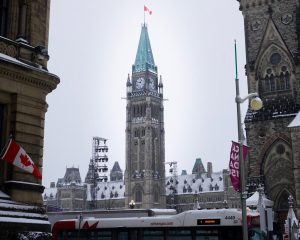
Now, with a deal made to help cities, the work begins
Canada’s outdated federal structure needs to be corrected to put provinces and municipalities on better footing, and coordination must be trilateral. Enid Slack, Tomas Hachard The $19-billion agreement between Ottawa and the provinces announced on July 16 delivered what municipalities and experts have long been calling for: support for municipalities to cover deficits resulting from the pandemic, […]
Municipal immigration policymaking in Canadian cities: the state of the art
Kristin R. Good How have immigration and diversity shaped urban life and local governance? The Routledge Handbook to the Governance of Migration and Diversity in Cities focuses on the ways migration and diversity have transformed cities, and how cities have responded to the challenges and opportunities offered. Strengthening the relevance of the city as a crucial […]
More Tax Sources for Canada’s Largest Cities: Why, What, and How?
Canadian cities have long called for access to more tax revenues. This paper argues that additional taxes are appropriate for major cities, describes the advantages and disadvantages of potential new taxes, and estimates the revenue from a city income tax, a city sales tax, and a city fuel tax for eight Canadian cities – Vancouver, […]

How Much Local Fiscal Autonomy Do Cities Have?
A Comparison of Eight Cities around the World Enid Slack Local fiscal autonomy is the extent to which local governments rely on locally raised revenues for funding (rather than receiving transfers from federal or provincial governments) and on their ability to set their own tax rates. A comparison of Toronto, London, Paris, Berlin, Frankfurt, Madrid, […]
The Fallacy of the ‘Creatures of the Provinces’
Recognizing and Protecting Municipalities’ Constitutional Status Kristin R. Good This paper explores the place of municipalities in Canada’s democratic system and constitution, arguing that their status in Canada’s constitutional order ought to be recognized and secured. The constitutional doctrine of “creatures of the provinces” is a legal fiction. The fact that municipalities are included under […]